



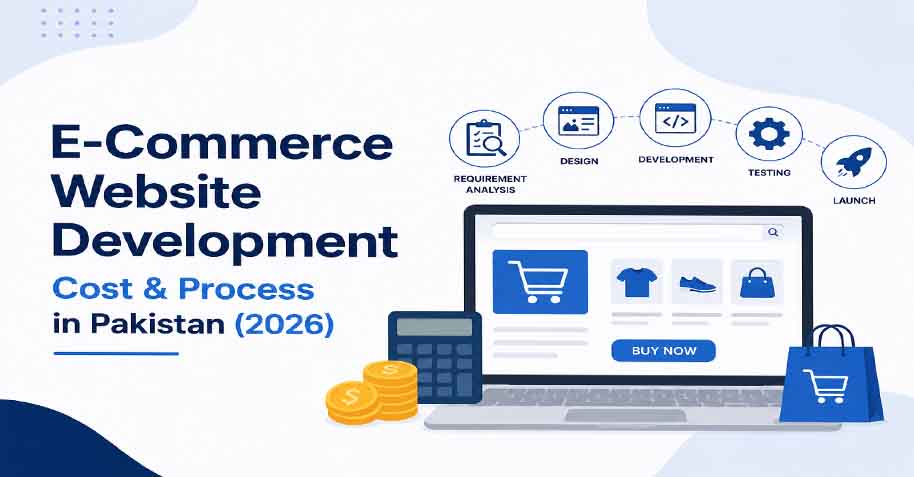
E-Commerce Website Development Cost & Process in Pakistan (2026)
The e-commerce industry in Pakistan has experienced remarkable growth over the past few years, with more businesses shifting from traditional retail to online selling. From clothing brands to electronics, food delivery to handmade crafts, entrepreneurs across the country are recognizing the immense potential of building a strong online store. However, one of the most common questions business owners ask before starting this journey is: how much does e-commerce website development actually cost, and what does the process involve?
Understanding both the cost structure and development process is essential for making informed decisions and avoiding unexpected expenses. This guide breaks down everything you need to know about E-Commerce Development Experts, pricing factors, and the step-by-step process involved in building a successful online store in Pakistan in 2026.
Why E-Commerce Development Costs Vary So Much ?
One of the biggest challenges businesses face when researching e-commerce development is the wide range of pricing available in the market. Costs can range from a few thousand rupees for a basic template-based store to several lakhs for a fully custom-built platform with advanced features.
This variation exists because e-commerce websites are not one-size-fits-all solutions. A small business selling a handful of products has very different requirements than a large retailer managing thousands of SKUs, multiple payment gateways, and complex inventory systems. Understanding your specific business needs is the first step toward getting an accurate cost estimate.
Key Factors That Influence E-Commerce Website Cost
Several important factors determine the final price of an e-commerce website, and understanding these can help business owners budget more effectively.
Platform choice plays a significant role in overall cost. Businesses can choose between ready-made platforms like Shopify or WooCommerce, which are more affordable and quicker to launch, or fully custom-built solutions, which offer greater flexibility but require higher investment and development time.
Design complexity also impacts pricing substantially. A simple, template-based design costs significantly less than a fully custom, brand-specific design created from scratch. Businesses aiming for a unique, professional online presence often invest more in custom UI/UX design to stand out from competitors.
Number of features and integrations required directly affects cost as well. Basic stores may only need product listings and a shopping cart, while advanced stores might require features like multi-vendor support, advanced filtering, loyalty programs, live chat, and third-party integrations each adding to development time and cost.
Payment gateway integration is another important consideration, especially in Pakistan where multiple local and international payment options such as JazzCash, EasyPaisa, bank transfers, and cash on delivery often need to be integrated for maximum customer convenience.
Ongoing maintenance and support should also be factored into the overall budget. E-commerce websites require regular updates, security patches, and technical support to run smoothly, which is typically an additional recurring cost beyond the initial development.
Typical Cost Ranges for E-Commerce Development in Pakistan
While exact pricing depends on project scope, general cost ranges can help business owners set realistic expectations.
Basic e-commerce websites, built using pre-designed templates with essential features like product listings, a shopping cart, and basic payment integration, typically fall on the lower end of the pricing spectrum. These are ideal for small businesses or startups looking to establish an initial online presence quickly.
Mid-range e-commerce websites usually include semi-custom design, additional features like discount codes, customer reviews, and multiple payment gateway integrations. This tier suits growing businesses that need more functionality without the cost of a fully custom build.
Advanced or fully custom e-commerce platforms represent the highest investment tier, offering unique design, complex functionality, scalability for high traffic, and integration with inventory management or CRM systems. These solutions are typically chosen by established businesses or those planning significant long-term growth.
It's important to remember that choosing the cheapest option isn't always the best strategy. Investing in Best E-Commerce Website Development practices from the start often saves money in the long run by reducing the need for costly redesigns or fixes later.
The Step-by-Step E-Commerce Development Process
Understanding the development process helps businesses know what to expect and how to plan their timeline effectively.
Step 1: Requirement Analysis and Planning
Every successful e-commerce project begins with a thorough understanding of business goals, target audience, and required features. During this phase, developers work closely with the business owner to outline the scope, select the appropriate platform, and create a project timeline.
Step 2: UI/UX Design
Once requirements are finalized, the design phase begins. This involves creating wireframes and visual designs for the homepage, product pages, checkout process, and other key sections. A well-designed interface plays a major role in customer trust and conversion rates.
Step 3: Development and Coding
After design approval, developers begin building the actual website, including front-end elements customers interact with and back-end systems that manage products, orders, and customer data. This is typically the most time-intensive phase of the project.
Step 4: Payment Gateway and Third-Party Integrations
At this stage, necessary payment gateways, shipping calculators, and any third-party tools (such as marketing or analytics platforms) are integrated into the website to ensure smooth, functional operations.
Step 5: Testing and Quality Assurance
Before launch, the website undergoes rigorous testing to identify and fix bugs, ensure mobile responsiveness, and verify that all features including checkout and payment processes function correctly across different devices and browsers.
Step 6: Launch and Post-Launch Support
Once testing is complete, the website goes live. However, the process doesn't end there ongoing support, updates, and monitoring are essential to ensure the store continues running smoothly and securely.
Why Businesses Should Work with Professional Developers ?
While budget-friendly DIY platforms exist, many businesses find significantly better long-term results by working with Professional E-Commerce Development teams. Experienced developers understand not just how to build a website, but how to optimize it for performance, security, and conversions.
Professional teams also help businesses avoid common pitfalls such as poor mobile optimization, slow loading speeds, insecure payment processing, or scalability issues that can arise as the business grows. These issues, if left unaddressed, can directly impact sales and customer trust.
Additionally, experienced developers bring valuable insight into current e-commerce trends and best practices, ensuring the final product is not only functional but competitive in today's fast-evolving digital marketplace.
Common Mistakes Businesses Make When Budgeting for E-Commerce Development
Many business owners underestimate the true cost of running an e-commerce website by focusing only on the initial development price. This often leads to unexpected expenses down the line.
Ignoring maintenance costs is a frequent oversight. Websites require regular updates, security monitoring, and occasional feature additions, all of which come with ongoing costs beyond the initial build.
Choosing the cheapest option without evaluating quality can also backfire. A poorly built website may require a complete redesign within a year or two, ultimately costing more than investing in quality development from the start.
Underestimating marketing costs is another common mistake. Building the website is just one part of running a successful online store driving traffic through SEO, social media, and paid advertising requires additional budget planning.
How to Choose the Right E-Commerce Development Partner ?
Selecting the right development partner is just as important as budgeting correctly. Businesses should look for teams with a proven portfolio, transparent pricing, and clear communication throughout the project.
It's also important to choose a partner who understands the local market including popular payment methods, shipping logistics, and customer behavior specific to Pakistan. Working with experienced, Professional E-Commerce Development specialists ensures the final product is not only technically sound but also tailored to local business needs.
Final Thoughts
E-commerce website development cost in Pakistan varies significantly based on platform choice, design complexity, required features, and ongoing support needs. While basic stores can be launched on a modest budget, businesses aiming for long-term growth often benefit from investing in more comprehensive, professionally built solutions.
By understanding the full development process and working with experienced E-Commerce Development Experts, businesses can build a store that not only looks professional but performs reliably, scales with growth, and delivers real value to customers in 2026 and beyond.
Frequently Asked Questions (FAQs)
1. How much does a basic e-commerce website cost in Pakistan?
Basic e-commerce websites using template-based designs and essential features typically fall on the lower end of pricing, making them suitable for startups and small businesses with limited budgets.
2. What factors affect e-commerce website development cost the most?
Platform choice, design complexity, number of features, payment gateway integrations, and ongoing maintenance requirements are the primary factors influencing overall cost.
3. Is it better to use a ready-made platform or a custom-built e-commerce website?
Ready-made platforms are faster and more affordable, while custom-built websites offer greater flexibility and scalability, making them better suited for businesses with specific or advanced requirements.
4. How long does it take to develop an e-commerce website?
Development timelines vary based on complexity, but most projects take anywhere from a few weeks to a couple of months, including design, development, and testing phases.
5. Do e-commerce websites require ongoing costs after launch?
Yes. Regular maintenance, security updates, hosting, and occasional feature enhancements are necessary to keep the website running smoothly and securely.
6. Why should I hire professional e-commerce developers instead of building the website myself?
Professional developers ensure better performance, security, and scalability, helping avoid costly issues that often arise from inexperienced or DIY website builds.
Comments