



Driving Sustainable Growth Through Modern Customer Acquisition Strategies
Introduction
In today's highly competitive digital economy, organizations face increasing pressure to generate consistent revenue, expand market reach, and acquire high-value customers. Traditional marketing methods are no longer sufficient to support long-term business growth, especially in industries where competition is intense and customer expectations continue to evolve. Companies must adopt sophisticated approaches that combine technology, data analysis, strategic marketing, and sales alignment to attract and convert potential buyers effectively. This is where Enterprise Lead Generation Services and Customer Acquisition Solutions play a transformative role.
Lead generation and customer acquisition have become the foundation of modern business development. Organizations that successfully identify, engage, and nurture qualified prospects are better positioned to achieve predictable revenue growth and sustainable competitive advantages. By implementing advanced lead generation strategies, enterprises can connect with decision-makers, strengthen brand authority, and create meaningful relationships that drive long-term success.
Modern customer acquisition is not simply about collecting contact information. It involves understanding customer behavior, identifying purchasing intent, delivering relevant experiences, and guiding prospects through every stage of the buying journey. Companies that master this process can significantly improve conversion rates while reducing customer acquisition costs.
The Changing Landscape of Business Growth
The business environment has undergone dramatic changes over the past decade. Digital transformation, evolving consumer expectations, and increased market competition have reshaped how companies attract and retain customers. Buyers now conduct extensive research before making purchasing decisions, often interacting with multiple online channels throughout their journey.
As a result, enterprises must establish a strong presence across search engines, social media platforms, websites, and digital advertising networks. Prospective customers expect valuable content, personalized communication, and seamless experiences before they commit to a purchase.
Organizations that fail to adapt to these changing dynamics often struggle to generate consistent leads and maintain growth momentum. In contrast, businesses that invest in strategic acquisition programs can build scalable systems that continuously attract qualified prospects and create new revenue opportunities.
Building a Strong Foundation for Customer Acquisition
Successful customer acquisition begins with a clear understanding of target audiences. Every business serves a unique market with distinct needs, challenges, and purchasing behaviors. Identifying these characteristics enables organizations to create highly targeted campaigns that resonate with potential customers.
A strong acquisition strategy aligns marketing and sales teams around shared objectives. This alignment ensures that leads are not only generated effectively but also nurtured appropriately throughout the conversion process. When departments work together seamlessly, businesses can improve efficiency and maximize return on investment.
One powerful phrase that supports this strategy is Advanced B2B Lead Generation and Revenue Growth Solutions. This long-tail keyword reflects the growing demand for enterprise-level systems designed to generate qualified opportunities while accelerating business expansion.
Companies that establish a strong strategic foundation are better equipped to adapt to market changes, capitalize on emerging trends, and maintain consistent growth over time.
Creating Meaningful Connections with Prospects
Today's buyers expect more than promotional messaging. They seek valuable information, expert guidance, and personalized experiences that address their specific challenges. Organizations must focus on creating genuine connections rather than relying solely on aggressive sales tactics.
Content marketing plays a critical role in relationship building. Educational articles, case studies, whitepapers, webinars, and industry insights help businesses establish credibility while demonstrating expertise. Valuable content positions organizations as trusted advisors rather than simple service providers.
As prospects engage with educational resources, they move closer to making informed purchasing decisions. Businesses that consistently provide relevant information often develop stronger relationships and achieve higher conversion rates.
Meaningful engagement also strengthens brand perception. Customers are more likely to trust companies that prioritize their needs and provide solutions to their problems. This trust becomes a powerful driver of long-term customer loyalty.
Leveraging Data for Smarter Decision-Making
Data has become one of the most valuable assets in modern marketing and sales operations. Every customer interaction generates insights that can be used to improve campaign performance, optimize messaging, and enhance customer experiences.
Advanced analytics enable organizations to identify trends, measure engagement levels, and understand purchasing behaviors. These insights help businesses allocate resources more effectively while focusing efforts on the most promising opportunities.
Predictive analysis allows companies to anticipate future customer actions and tailor strategies accordingly. By understanding what motivates buyers, businesses can deliver highly relevant experiences that increase the likelihood of conversion.
Data-driven decision-making also reduces wasteful spending by eliminating ineffective tactics. Instead of relying on assumptions, organizations can use measurable insights to refine their acquisition strategies and improve overall performance.
Strengthening Brand Authority in Competitive Markets
Brand authority is a critical factor in enterprise growth. Buyers are more likely to engage with organizations that demonstrate expertise, credibility, and industry leadership. Establishing authority requires consistent effort across multiple channels and customer touchpoints.
High-quality content, thought leadership initiatives, customer success stories, and professional branding all contribute to stronger market positioning. Businesses that consistently share valuable knowledge often become recognized as trusted industry resources.
Another powerful long-tail keyword that aligns with this objective is Enterprise Customer Acquisition Strategies for High-Value Business Growth. This phrase reflects the importance of attracting quality customers while building a strong and reputable brand presence.
Authority not only attracts new prospects but also enhances customer retention. Clients prefer working with organizations that have proven expertise and a reputation for delivering exceptional results.
Optimizing the Customer Journey
The customer journey encompasses every interaction a prospect has with a business before becoming a customer. Understanding this journey is essential for improving conversion rates and maximizing acquisition effectiveness.
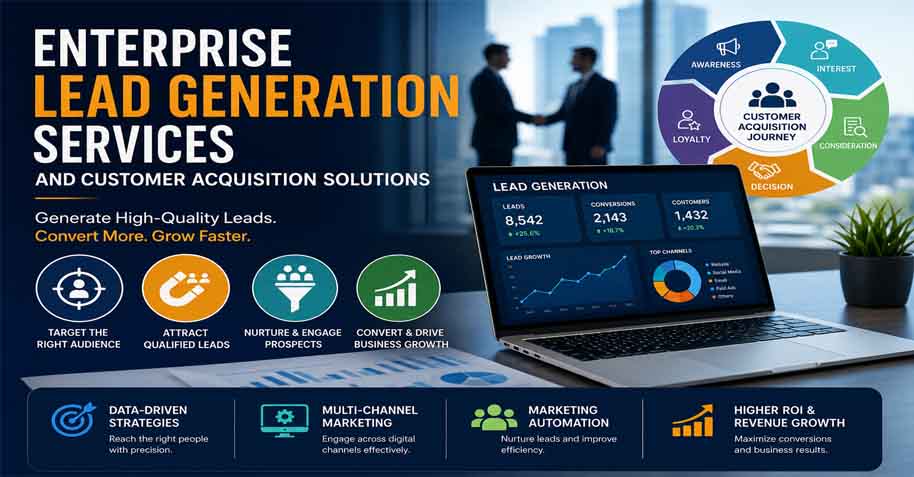
Modern buyers often move through multiple stages, including awareness, consideration, evaluation, and decision-making. Each stage requires different types of communication and engagement.
Businesses that optimize the customer journey create seamless experiences that guide prospects toward conversion. This involves providing relevant content, addressing objections, and offering clear paths to action.
Technology plays an important role in journey optimization. Automation tools, customer relationship management platforms, and analytics systems help organizations track interactions and deliver personalized experiences at scale.
When customers encounter consistent and valuable interactions throughout their journey, they are more likely to develop trust and move forward with purchasing decisions.
Enhancing Performance Through Marketing Automation
Marketing automation has revolutionized the way organizations manage lead generation and customer acquisition. Automated systems streamline repetitive tasks, improve efficiency, and ensure consistent communication with prospects.
Through automation, businesses can deliver targeted messages based on user behavior, engagement history, and purchasing intent. This level of personalization enhances customer experiences while increasing conversion opportunities.
Automation also improves lead nurturing by ensuring that prospects receive relevant information at the right time. Rather than relying on manual processes, organizations can create scalable workflows that support growth without increasing operational complexity.
Companies that leverage automation effectively often experience higher productivity, stronger engagement, and improved return on investment.
Expanding Reach Through Multi-Channel Engagement
Customers interact with brands across a variety of platforms and devices. Successful acquisition strategies must account for these behaviors by maintaining a consistent presence across multiple channels.
Search engines, social media networks, email marketing campaigns, content platforms, and paid advertising channels all contribute to customer acquisition efforts. Each platform serves a unique purpose within the overall marketing ecosystem.
Businesses that implement integrated multi-channel strategies can reach prospects at different stages of the buying process. This approach increases visibility, reinforces messaging, and creates more opportunities for engagement.
A valuable long-tail keyword that supports this objective is Comprehensive Digital Lead Generation and Customer Conversion Services. This keyword emphasizes the importance of combining multiple channels to achieve stronger acquisition outcomes.
Multi-channel engagement helps organizations build awareness, strengthen relationships, and create consistent growth opportunities across diverse audiences.
Adapting to Emerging Market Trends
Technology and consumer behavior continue to evolve rapidly. Businesses that remain adaptable are better positioned to capitalize on new opportunities and maintain competitive advantages.
Artificial intelligence, machine learning, predictive analytics, and personalization technologies are transforming customer acquisition processes. These innovations enable organizations to deliver more relevant experiences while improving operational efficiency.
Voice search, mobile-first experiences, and interactive content formats are also influencing customer expectations. Enterprises must continuously evaluate emerging trends and adjust their strategies accordingly.
Adaptability ensures that businesses remain relevant in changing markets. Organizations that embrace innovation can attract modern consumers and maintain long-term growth momentum.
Creating Long-Term Revenue Opportunities
The ultimate goal of customer acquisition is not simply generating leads but creating sustainable revenue growth. High-performing organizations focus on attracting customers who deliver long-term value rather than pursuing short-term gains.
Customer lifetime value has become a key performance indicator for many enterprises. By prioritizing quality over quantity, businesses can build stronger relationships and maximize profitability.
Effective acquisition strategies create a steady pipeline of opportunities while supporting customer retention initiatives. Satisfied customers often become repeat buyers, brand advocates, and referral sources, further accelerating growth.
Long-term revenue generation requires continuous optimization, performance analysis, and strategic refinement. Organizations that invest in ongoing improvement can achieve greater scalability and profitability.
Conclusion
Modern enterprises operate in an environment where customer acquisition and lead generation directly influence business success. Companies that implement strategic acquisition programs can attract qualified prospects, strengthen brand authority, and drive sustainable revenue growth. Through data-driven decision-making, personalized engagement, marketing automation, and multi-channel outreach, organizations can build scalable systems that support long-term expansion.
Enterprise Lead Generation Services and Customer Acquisition Solutions provide businesses with the tools and strategies needed to thrive in competitive markets. By focusing on customer needs, optimizing the buying journey, and embracing technological innovation, enterprises can create meaningful relationships that generate lasting value.
As markets continue to evolve, businesses that prioritize strategic customer acquisition will remain better positioned to capture opportunities, outperform competitors, and achieve sustained growth. The future belongs to organizations that understand how to transform prospects into loyal customers and convert customer relationships into long-term business success.
Comments