



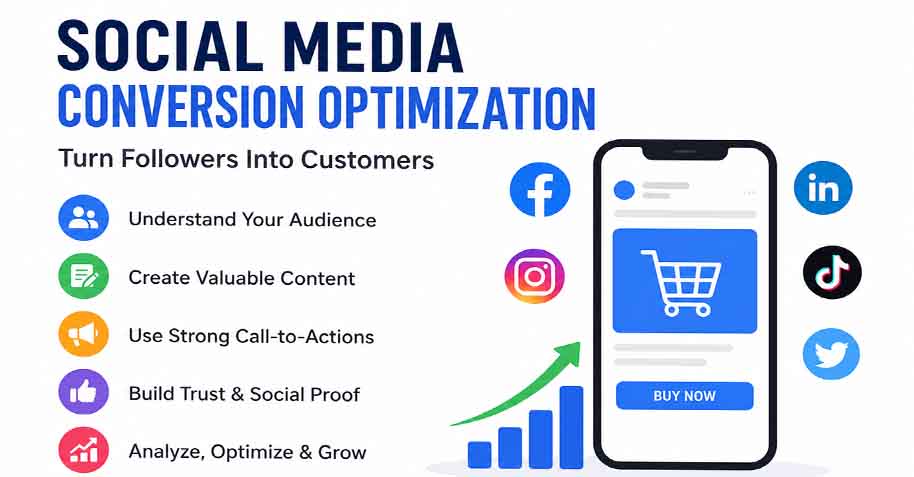
Social Media Conversion Optimization
Introduction
In today’s digital world, businesses are not only competing for attention but also for conversions. Social media platforms have become one of the most powerful marketing channels where brands engage with customers, build trust, and increase sales. However, simply posting content on social media is no longer enough. Brands now need a complete strategy that transforms followers into loyal customers. This process is known as Social Media Conversion Optimization.
Social media conversion optimization focuses on improving every part of a social media campaign so that users take valuable actions. These actions may include purchasing a product, filling out a contact form, subscribing to a newsletter, downloading an app, or booking a service. Companies that invest in optimization strategies gain better engagement, improved return on investment, and stronger customer relationships.
Modern businesses understand that audiences are becoming smarter and more selective. People scroll through hundreds of posts daily, which means only strategic and high-quality content can grab attention. This is why platforms like Facebook, Instagram, LinkedIn, TikTok, and X require data-driven marketing strategies. Brands that continuously optimize their social presence achieve higher growth and better customer retention.
At Hubsol, businesses are using advanced marketing techniques to improve social media performance and maximize conversions. Strong optimization strategies help brands turn ordinary campaigns into revenue-generating systems that produce measurable results.
Why Social Media Conversion Optimization Matters ?
Many businesses spend thousands of dollars on advertisements and content creation but still fail to generate sales. The reason is simple: they focus only on visibility instead of conversion. Conversion optimization ensures that every social media effort leads toward a business goal.
When optimization is done correctly, brands experience increased customer trust, higher engagement rates, better lead generation, improved brand awareness, more website traffic, and greater return on advertising spend.
Social media audiences expect value before making purchasing decisions. Businesses that understand audience behavior can create campaigns that emotionally connect with users and encourage action.
One major advantage of optimization is the ability to analyze user behavior. Brands can track clicks, impressions, engagement, watch time, and purchasing patterns. This data allows marketers to improve campaigns continuously.
Another important factor is competition. Every industry is crowded with businesses trying to attract the same audience. A properly optimized campaign helps brands stand out and dominate their niche.
Understanding Audience Intent
Audience intent is the foundation of every successful conversion strategy. Businesses must understand what users want, what problems they face, and how their products or services can provide solutions.
Different users visit social media platforms for different reasons. Some want entertainment, while others search for information or products. Successful brands create content that matches user intent perfectly.
For example, educational content works well for users seeking knowledge, while emotional storytelling performs better for audiences looking for inspiration. Brands that understand psychology can guide users through the buying journey naturally.
Using audience insights also helps businesses identify the best posting times, content styles, and communication methods. Companies that ignore audience intent usually struggle to achieve meaningful engagement.
One powerful strategy is creating personalized experiences. Personalized campaigns make users feel valued and increase the likelihood of conversion. Businesses using advanced audience targeting for customer acquisition often see significantly higher engagement and sales performance.
At Hubsol, marketers focus heavily on customer behavior analysis because understanding the audience is the key to long-term digital success.
The Role of High-Quality Content
Content is the driving force behind social media conversions. Weak content creates low engagement, while strong content builds authority and motivates action.
High-performing content usually includes clear messaging, emotional appeal, attractive visuals, strong storytelling, action-driven language, and valuable information.
Users engage with content that feels authentic and useful. Businesses should avoid overly promotional posts because modern audiences dislike aggressive selling techniques.
Educational posts, tutorials, behind-the-scenes videos, case studies, and success stories often perform exceptionally well. These formats build trust and encourage users to interact with the brand.
Video marketing has become one of the most effective conversion tools. Short-form videos on Instagram Reels, TikTok, and YouTube Shorts generate massive engagement because users prefer fast and visually appealing content.
Another important strategy is consistency. Brands that post regularly stay visible in audience feeds and maintain stronger relationships with followers.
Businesses implementing high engagement social media funnel strategy can guide users from awareness to purchase more effectively. A structured content funnel ensures that every post supports a larger marketing objective.
Importance of Call-to-Action Strategies
A strong call-to-action plays a major role in conversion optimization. Without proper direction, users may engage with content but never take meaningful action.
Effective calls-to-action encourage users to buy products, visit websites, register for services, download resources, subscribe to newsletters, and contact businesses.
The best CTAs are simple, direct, and persuasive. Phrases like "Get Started Today,” "Claim Your Offer,” or "Book Your Free Consultation” create urgency and motivate users.
Placement is equally important. CTAs should appear naturally within captions, videos, stories, and advertisements. Overusing CTAs can feel spammy, while underusing them can reduce conversions.
Businesses should also test different CTA styles to identify which performs best. A/B testing helps marketers improve click-through rates and customer engagement.
At Hubsol, optimization specialists frequently analyze CTA performance because small improvements can significantly increase conversion rates.
Social Proof and Trust Building
Trust is one of the biggest factors influencing online purchasing decisions. Users rarely buy from brands they do not trust. This is why social proof is essential for conversion optimization.
Social proof includes customer reviews, testimonials, user-generated content, influencer collaborations, success stories, and case studies.
When people see others having positive experiences with a brand, they feel more confident making purchases themselves.
Influencer marketing has become particularly powerful because audiences trust creators they follow regularly. Authentic influencer partnerships can dramatically improve conversion rates.
Businesses should also respond quickly to comments and messages. Active communication shows professionalism and improves customer confidence.
Brands using conversion focused digital engagement techniques often combine social proof with targeted messaging to create highly persuasive campaigns.
Optimizing Social Media Advertisements
Paid advertising is one of the fastest ways to increase conversions. However, running ads without optimization can waste marketing budgets quickly.
Successful social media advertising requires audience targeting, creative visuals, strong copywriting, landing page optimization, performance tracking, and continuous testing.
Targeting allows businesses to show ads to the most relevant users. Platforms like Facebook and Instagram offer advanced targeting options based on demographics, interests, behavior, and purchasing habits.
Creative visuals are equally important because users decide within seconds whether to continue watching or scroll away. High-quality graphics and videos significantly improve ad performance.
Landing pages also affect conversions. If users click an advertisement but land on a slow or confusing website, they will likely leave without taking action.
Retargeting campaigns are another highly effective strategy. Retargeting allows brands to reconnect with users who previously interacted with their content or website.
Hubsol helps businesses optimize social advertising campaigns to ensure better results and improved marketing efficiency.
Importance of Analytics and Performance Tracking
Data analysis is essential for successful optimization. Without tracking performance, businesses cannot identify what works and what needs improvement.
Key performance indicators include conversion rate, click-through rate, engagement rate, bounce rate, reach and impressions, and customer acquisition cost.
Analytics tools help businesses make smarter decisions based on real data instead of assumptions.
One major advantage of social media marketing is the availability of detailed insights. Platforms provide valuable information about audience demographics, content performance, and engagement patterns.
Businesses should regularly review analytics reports and adjust strategies accordingly. Even small changes in content design or posting schedules can produce better results.
Testing different headlines, visuals, captions, and formats helps identify the most effective combinations. Continuous optimization leads to sustainable growth over time.
At Hubsol, marketing professionals rely heavily on data-driven strategies because measurable performance is critical for long-term success.
The Power of Video Marketing
Video content dominates modern social media platforms. Short videos generate higher engagement because they capture attention quickly and deliver information efficiently.
Popular video formats include product demonstrations, tutorials, customer testimonials, behind-the-scenes clips, educational videos, and live sessions.
Live streaming has become particularly effective because it creates real-time interaction between brands and audiences. Users appreciate authentic communication and immediate responses.
Short-form videos also benefit from platform algorithms that prioritize engaging content. Brands using creative video strategies often experience rapid audience growth.
Businesses should focus on storytelling instead of aggressive promotion. Emotional and relatable videos perform significantly better than purely sales-focused content.
Mobile Optimization for Better Conversions
Most social media users access platforms through smartphones. This means businesses must optimize all content and landing pages for mobile devices.
Poor mobile experiences can destroy conversion opportunities instantly. Slow-loading pages, unreadable text, and difficult navigation frustrate users and increase bounce rates.
Mobile optimization includes fast website speed, responsive design, clear navigation, mobile-friendly forms, and easy checkout processes.
Businesses should test campaigns across multiple devices to ensure smooth user experiences.
Social commerce is also growing rapidly. Platforms like Instagram and TikTok now allow users to purchase products directly through apps. Brands that optimize for mobile shopping gain major competitive advantages.
Future Trends in Social Media Conversion Optimization
The future of social media marketing will become more data-driven and personalized. Artificial intelligence, automation, and predictive analytics are already transforming digital marketing strategies.
Emerging trends include AI-powered personalization, voice search optimization, interactive content, augmented reality experiences, advanced chatbots, and predictive customer behavior analysis.
Brands that adapt quickly to new technologies will dominate their industries. Businesses must continuously evolve to stay relevant in competitive digital markets.
Consumer expectations are also increasing. Users now expect fast responses, personalized experiences, and seamless interactions across platforms.
Companies investing in innovation and optimization today will build stronger digital authority in the future.
Conclusion
Social Media Conversion Optimization is no longer optional for businesses that want sustainable online growth. Modern social media success depends on more than likes and followers. Brands must focus on building trust, understanding audiences, optimizing campaigns, and driving measurable actions.
From high-quality content and strategic advertising to analytics and mobile optimization, every element contributes to stronger conversion performance. Businesses that continuously improve their social media strategies achieve higher engagement, increased revenue, and long-term customer loyalty.
Hubsol understands the evolving digital landscape and helps businesses implement powerful conversion-focused marketing strategies that produce real results. With proper optimization techniques, brands can transform social media platforms into highly profitable business assets.
FAQs
What is Social Media Conversion Optimization?
Social Media Conversion Optimization is the process of improving social media strategies to encourage users to take valuable actions such as purchasing products, signing up for services, or generating leads.
Why is conversion optimization important for businesses?
Conversion optimization helps businesses maximize their marketing results by improving engagement, increasing sales, reducing advertising waste, and strengthening customer relationships.
Which social media platform is best for conversions?
The best platform depends on the business type and target audience. Instagram, Facebook, LinkedIn, TikTok, and YouTube all offer strong conversion opportunities when used strategically.
How can businesses improve social media conversions?
Businesses can improve conversions by creating valuable content, using strong calls-to-action, optimizing advertisements, analyzing performance data, and building customer trust.
Does video marketing improve conversion rates?
Yes, video marketing significantly improves engagement and conversions because videos capture attention quickly and communicate messages more effectively than text-only content.
How often should businesses optimize social media campaigns?
Businesses should continuously monitor and optimize campaigns regularly because audience behavior, trends, and platform algorithms change frequently.
Comments