



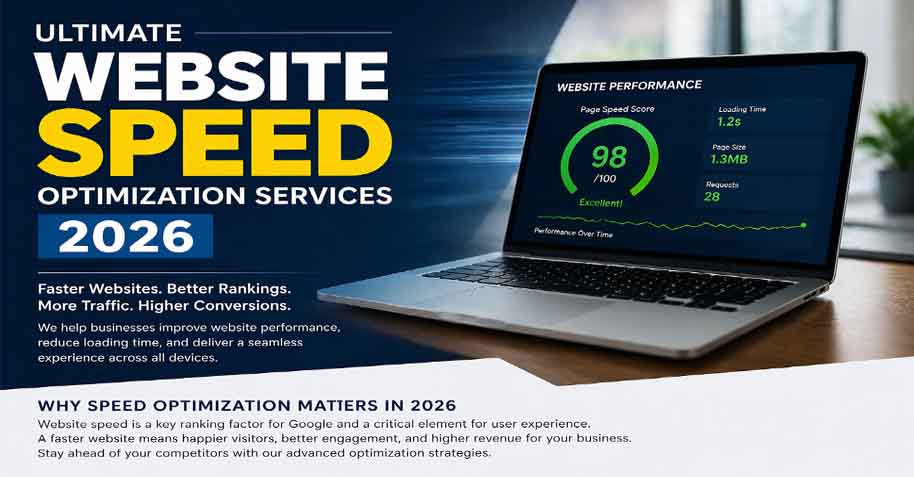
Ultimate Website Speed Optimization Services 2026
Introduction
In today’s digital world, website speed has become one of the most important ranking and user experience factors for online businesses. Companies spend thousands on website development, SEO campaigns, paid advertisements, and social media marketing, but many still ignore website speed. A slow-loading website can negatively affect rankings, user engagement, and overall business revenue. In 2026, users expect websites to load instantly, and businesses that fail to meet these expectations often lose valuable traffic. A fast website improves customer trust, increases conversions, and helps businesses stay ahead of competitors in highly competitive markets.
Modern websites must perform efficiently across desktops, tablets, and smartphones. Whether someone visits an eCommerce platform, business website, portfolio site, or service-based platform, loading speed directly affects how users interact with the website. Businesses are now investing heavily in speed optimization strategies such as image compression, server upgrades, caching systems, and code optimization to improve performance.
Why Website Speed Matters in 2026 ?
Website speed directly impacts customer retention and search engine rankings. Visitors expect immediate access to content, and even a small delay can force them to leave a website. Search engines like continue to prioritize websites that provide smooth user experiences. Faster websites often rank higher because they reduce bounce rates and improve engagement metrics.
For online stores, speed optimization is even more critical because customers expect product pages, checkout systems, and payment gateways to work instantly. Slow websites often lead to abandoned carts and lost sales opportunities.
Businesses must perform proper Website performance analysis to identify technical problems such as poor hosting, heavy scripts, outdated coding structures, and oversized media files.
Common Website Speed Problems
Many websites become slow because developers focus more on design elements than technical performance. Heavy JavaScript files, large CSS files, unoptimized databases, and excessive plugins often slow down websites significantly.
Large images and videos also create major performance issues because they consume excessive bandwidth. Businesses should always optimize media before uploading content to their websites.
Third-party scripts such as advertisements, tracking tools, and chat integrations can also reduce speed if not properly managed.
Professional Speed Optimization Services
Many businesses attempt to fix website speed issues themselves but often fail to resolve deeper technical problems. Professional agencies provide the best optimization services by analyzing hosting infrastructure, caching systems, coding errors, and database performance.
Experts use advanced optimization techniques to improve desktop and mobile speed performance. Platforms like help businesses improve loading speeds through CDN services that distribute content globally.
Mobile Speed Optimization
Mobile users now represent the majority of global internet traffic. Businesses must ensure their websites load quickly on smartphones and tablets. Mobile optimization includes responsive design improvements, lightweight coding structures, and faster image delivery systems.
Fast mobile websites improve customer retention and help businesses maintain better engagement rates across all devices.
Performance Testing Tools
Businesses use Google Page Speed Insights to measure website performance and identify technical issues affecting speed. This tool analyzes website performance on both desktop and mobile devices.
It provides recommendations for improving server response time, reducing JavaScript delays, optimizing images, and fixing layout issues.
Technical Methods for Faster Websites
Website owners use multiple technical strategies to improve loading speed. Browser caching helps store website data for returning visitors, while code minification removes unnecessary characters from files.
Lazy loading improves speed by loading images only when users scroll toward them. Server upgrades and content delivery networks also help reduce loading times.
SEO Benefits of Fast Websites
Fast websites improve search visibility by reducing bounce rates and increasing user engagement. Visitors spend more time on websites that load quickly, which improves conversions and lead generation opportunities.
Search engines reward businesses that provide better website experiences with stronger rankings and higher organic traffic.
Future of Website Speed Optimization
Artificial intelligence is transforming website optimization in 2026. Automated tools now identify performance bottlenecks and recommend faster solutions.
Businesses that ignore speed optimization may lose rankings, traffic, and long-term growth opportunities in competitive markets.
Conclusion
Website speed optimization is no longer optional for businesses that want strong online growth. Faster websites improve SEO rankings, customer experiences, and overall conversions.
Businesses that invest in professional optimization services can achieve long-term growth and maintain strong digital performance in 2026.
Frequently Asked Questions (FAQs)
What is website speed optimization?
Website speed optimization is the process of improving website loading times through better coding, image compression, caching systems, and server optimization. It helps websites perform faster for users across all devices.
Why is website speed important for SEO?
Website speed is important because search engines like prioritize websites that offer better user experiences. Faster websites often rank better and attract more traffic.
How can I check my website speed?
You can use tools like Google Page Speed Insights to analyze your website and identify technical issues affecting performance.
What causes websites to load slowly?
Common reasons include poor hosting, oversized images, excessive plugins, heavy scripts, and outdated website coding.
How long does website optimization take?
The timeline depends on website size and technical issues. Smaller websites may take a few days, while larger websites may require weeks.
Does website speed affect conversions?
Yes, faster websites improve user experience and encourage visitors to stay longer, increasing sales and lead generation opportunities.
Can WordPress websites be optimized?
Yes,websites can be optimized through caching plugins, database cleanup, image optimization, and better hosting solutions.
What is the ideal website loading time in 2026?
Most businesses aim for websites to load within two to three seconds for better user engagement and stronger SEO performance.
Comments